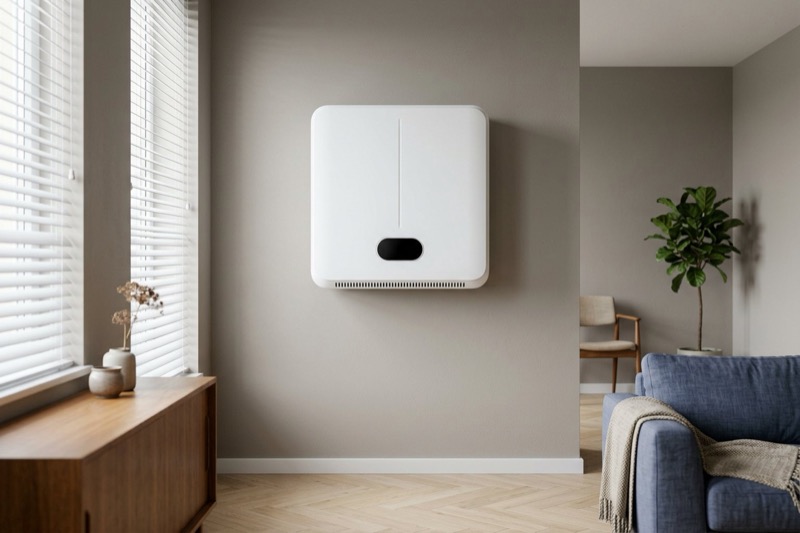
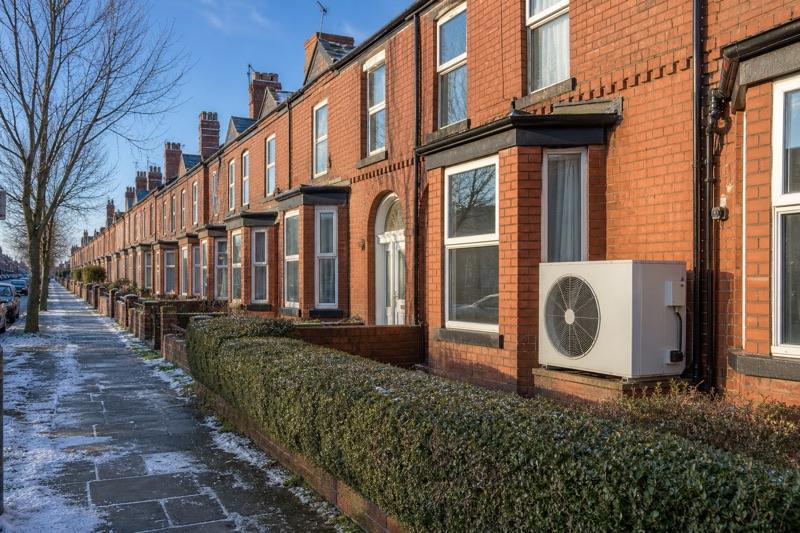
Free heat pump for 1 and 2 bedroom flats and 2 bedroom houses.*
Own a 1 or 2 bedroom flat or a 2 bedroom house heated by gas, oil, LPG or electricity? The heat pump we fit — an indoor or outdoor air-to-water unit, chosen at your survey to suit your home — is 100% covered by the Boiler Upgrade Scheme grant, so you pay nothing. Every one of the 192 flats we’ve had installed so far paid nothing. Book your free, no-obligation assessment.
*Terms and conditions apply. You must own the property (landlords included); social housing and shared ownership aren’t eligible. It must replace gas, oil, LPG or electric heating, and the property must not have had government heat pump funding before. Ofgem must approve the Boiler Upgrade Scheme grant, and our assessment and heat loss survey must confirm the heat pump suits your home. Any lease or freeholder consent must be in place. ByEco installs the heat pump itself, and ByEco is MCS certified for air source heat pump installation (certificate IAA10330). The offer is subject to grant funding being available. Houses with 3 or more bedrooms get a fixed-price quote instead.
The short version
- Decided: one compliance date, 1 October 2030, for all private tenancies in England and Wales, against a new EPC C standard, with a cost cap of £10,000.
- Not law yet: the government’s response says the changes “will be subject to Parliamentary approval”. The Energy Independence Bill was introduced on 4 November 2026; on 26 November 2026 Parliament’s bill tracker showed it at second reading in the Commons.
- Today: the minimum is still EPC E, with a £3,500 cap, and fines of up to £5,000 per property.
- Heat pumps: one route to the new standard, not a requirement. The government says Boiler Upgrade Scheme funding will not count toward the £10,000 cap.
- For landlords with small homes: ByEco installs a heat pump free of charge for eligible 1 and 2 bedroom flats and 2 bedroom houses, landlords included, subject to a free survey and eligibility.
“EPC C by 2030” has been talked about for years, and a lot of what is written about it is out of date. This guide sets out what is decided, what is law today and what is still to come, using the government’s own documents. It then explains where a heat pump fits, and where it does not. It is written for private landlords in England and Wales. It is general information, not legal or tax advice.
The short answer: decided, but not law yet
On 21 January 2026 the government published its response to the consultation on improving the energy performance of privately rented homes. It confirmed it is “introducing a single compliance date of 1 October 2030 for the new standard”, and that private landlords of all tenancies will be required to comply. Earlier proposals for a separate, earlier date for new tenancies were dropped.
But the same response says: “The legislative changes set out in this document will be subject to Parliamentary approval.” The plan is an Act of Parliament first, then regulations, “with the aim of it coming into force in 2027”. The Act needed is the Energy Independence Bill, which the government says was introduced to Parliament on Wednesday 4 November 2026. When we checked Parliament’s bill tracker on 26 November 2026, it was a bill, not an Act, at second reading in the House of Commons.
So: plan for 2030, but do not let anyone tell you the new standard already applies.
The rules today: EPC E
The rules in force now are the Energy Efficiency (Private Rented Property) (England and Wales) Regulations 2015, known as the Minimum Energy Efficiency Standard (MEES). In short:
- Minimum EPC E. Below E, you cannot let the property unless a valid exemption is registered.
- Cost cap £3,500. GOV.UK’s landlord guidance says you are not currently required to spend more than £3,500 (including VAT).
- Exemptions are registered on the PRS Exemptions Register, and the guidance says most last 5 years.
- Fines. Regulation 40 sets penalties such as up to £4,000 for letting a sub-standard property for 3 months or more, and the total “must be no more than £5,000” per property.
The government’s response confirms landlords “continue to be required to comply with the existing minimum standard of EPC E” until the new date. Note that GOV.UK’s landlord guidance page still describes the 2030 policy as being explored; the January 2026 response is the up-to-date source.
What the government has decided for 2030
| Today (law) | From 1 October 2030 (decided, not yet law) | |
|---|---|---|
| Minimum standard | EPC E | New EPC C standard, measured on the new EPC metrics |
| Who | Private rented homes | All private tenancies, one date for all |
| Cost cap | £3,500 including VAT | £10,000, with exemptions valid for 10 years |
| Maximum fine | £5,000 per property | Proposed £30,000 per property per breach, through the Energy Independence Bill |
Three more points from the government’s response:
- Early action counts. Homes graded C or above against the current Energy Efficiency Rating on an EPC issued before 1 October 2029 will be treated as compliant until that EPC expires.
- Average cost. The government estimates the “average spend per property to meet the standard will be £5,400”.
- Short-term lets are out of scope for now.
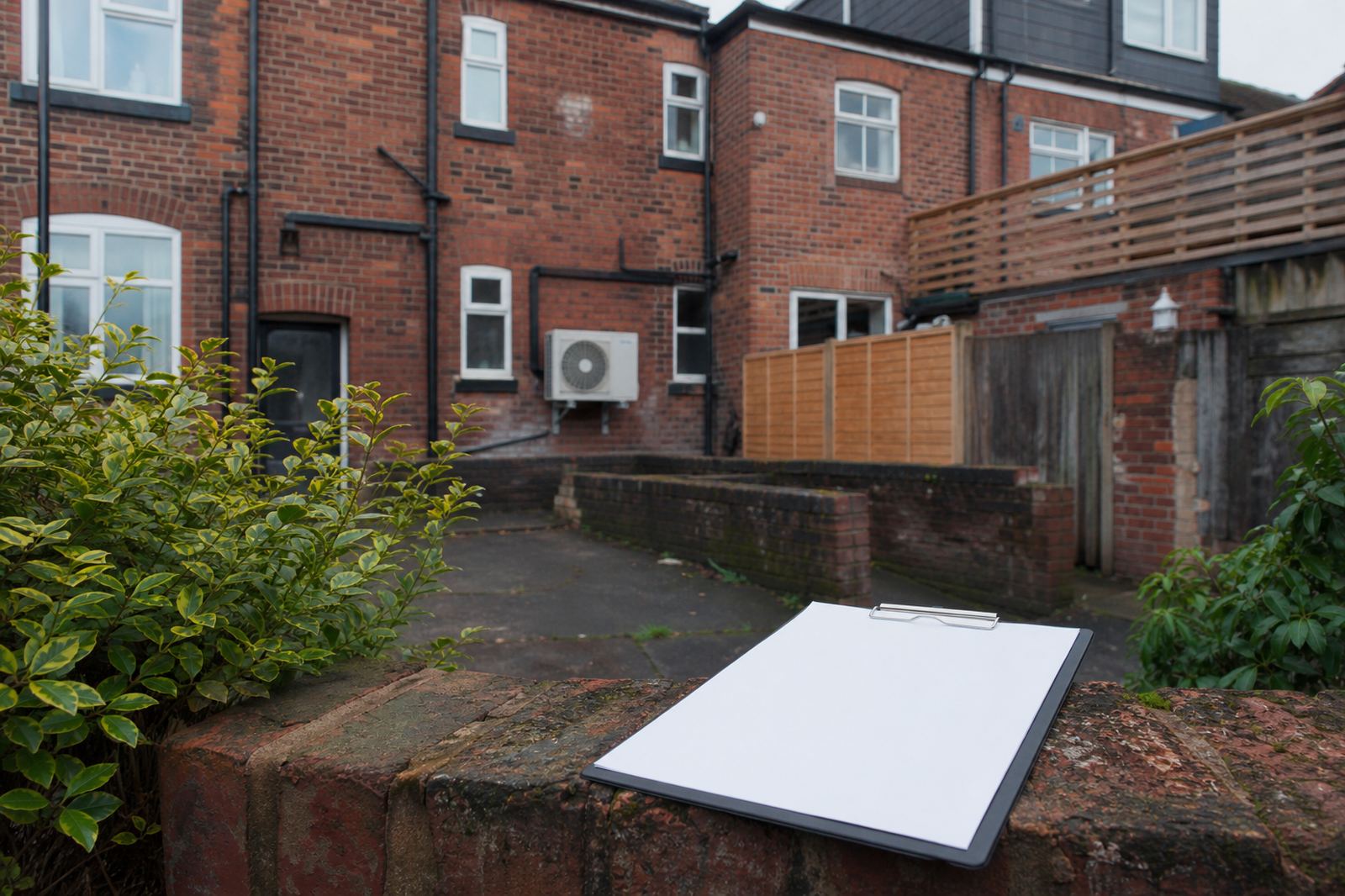
The timeline
| Date | What happens | Status |
|---|---|---|
| Now | EPC E minimum, £3,500 cap, fines up to £5,000 | Law |
| 21 January 2026 | Government response: single date of 1 October 2030, £10,000 cap | Decided |
| 4 November 2026 | Energy Independence Bill introduced | In Parliament |
| 2027 (aim) | Regulations to come into force, and reformed EPCs expected to launch in the second half of 2027 | Planned |
| 1 October 2029 | Last date for an EPC graded C or above on the current rating to count until it expires | Decided |
| 1 October 2030 | All private tenancies must meet the new standard | Decided, subject to Parliament |
The new EPC: why your current rating may not tell you much
The 2030 standard will be measured against reformed EPCs, not today’s. The government’s response describes “a primary standard set against the fabric performance metric on new EPCs”, so insulation and the building itself come first. Landlords then choose between a heating system standard and a smart readiness standard. The government has said the launch of the reformed EPCs is moving to the second half of 2027.
This matters for heat pumps. Today’s main EPC rating is based on running costs. The Energy Saving Trust says that because heat pumps often cost a similar amount to run as gas, “your EPC rating is likely to stay roughly the same” when you switch, while the environmental rating will always improve dramatically. The government says its new metrics resolve the problem of people being “penalised for doing the right thing”.
Where a heat pump fits
A heat pump is one way to meet the heating side of the new standard, not a requirement. The government’s response is explicit: it is “not the intention of government to require landlords to install a heat pump”.
Why landlords consider one anyway:
- The grant sits outside the cap. The response says “BUS funding will not count toward the cost cap of £10,000”.
- It replaces the boiler. Many rented homes will need a boiler replacement before 2030 anyway.
- Fabric first still applies. Because the new standard starts with fabric performance, insulation may be needed as well. A heat pump does not replace that.
The government’s response also notes, in its annex, that a heat pump replacing an existing heating system may be treated as a repair or maintenance cost for tax. That is the government’s summary, not advice: check with your accountant.
Using the Boiler Upgrade Scheme as a landlord
GOV.UK says the ownership test includes “a property you rent out to tenants”, and lists £7,500 towards an air source heat pump. You must be replacing fossil fuel heating, such as gas, oil, electric or LPG. Social housing is not eligible. Ofgem asks landlords to confirm they have told the tenant about the impact of the installation.
For small rented homes, ByEco’s offer applies to landlords on the same terms as owner-occupiers: a heat pump installed free of charge for eligible 1 and 2 bedroom flats and 2 bedroom houses, subject to a free survey and eligibility. Houses with 3 or more bedrooms get a fixed-price quote with the grant taken off. See heat pumps for landlords and landlords with several flats.
A sensible plan for the next four years
These are our suggestions, not legal requirements.
- Check each property’s current EPC and its expiry date on the GOV.UK register. A C or above issued before 1 October 2029 may carry you past 2030.
- Make sure everything is at least E today. That is the rule that can be enforced now.
- Start with the fabric. Loft and wall insulation and draught-proofing are likely to matter most under the new fabric metric.
- Plan heating replacements for when boilers reach the end of their life, and price a heat pump each time, with the grant taken off.
- Watch the bill. Details can change in Parliament. We will update this page as it progresses.
What to do next
If you let a 1 or 2 bedroom flat or a 2 bedroom house within 120 km of Manchester, call ByEco on 0161 710 4510 or use the contact page to book a free survey. Tell us the address area, what heats it now and whether you own it outright. ByEco installs the heat pump itself, and ByEco is MCS certified for air source heat pump installation (certificate IAA10330).
See also the Boiler Upgrade Scheme explained, do I need insulation for a heat pump?, our heat pumps page and where we work.
Sources
Every figure on this page was checked against primary sources on 26 November 2026. Grant rules, planning rules and prices change — if you are reading this much later, verify before acting.
- DESNZ — Improving the energy performance of privately rented homes: government response (21 January 2026)
- GOV.UK — Improving the energy performance of privately rented homes: 2025 update (consultation and outcome)
- GOV.UK — Energy reforms to cut bills and put power back in people’s hands (4 November 2026)
- UK Parliament — Energy Independence Bill
- legislation.gov.uk — Energy Efficiency (Private Rented Property) (England and Wales) Regulations 2015, regulation 40
- GOV.UK — Domestic private rented property: minimum energy efficiency standard, landlord guidance
- Energy Saving Trust — In-depth guide to heat pumps
- GOV.UK — Apply for the Boiler Upgrade Scheme: check if you’re eligible
Book your free home survey
Every home is different. The cost depends on the size of system, any radiators that need upgrading, the pipework and where the outdoor unit goes. Get in touch and we will arrange a free survey of your home and give you a clear quote. If you are happy with it, we can go ahead.