Free heat pump for 1 and 2 bedroom flats.*
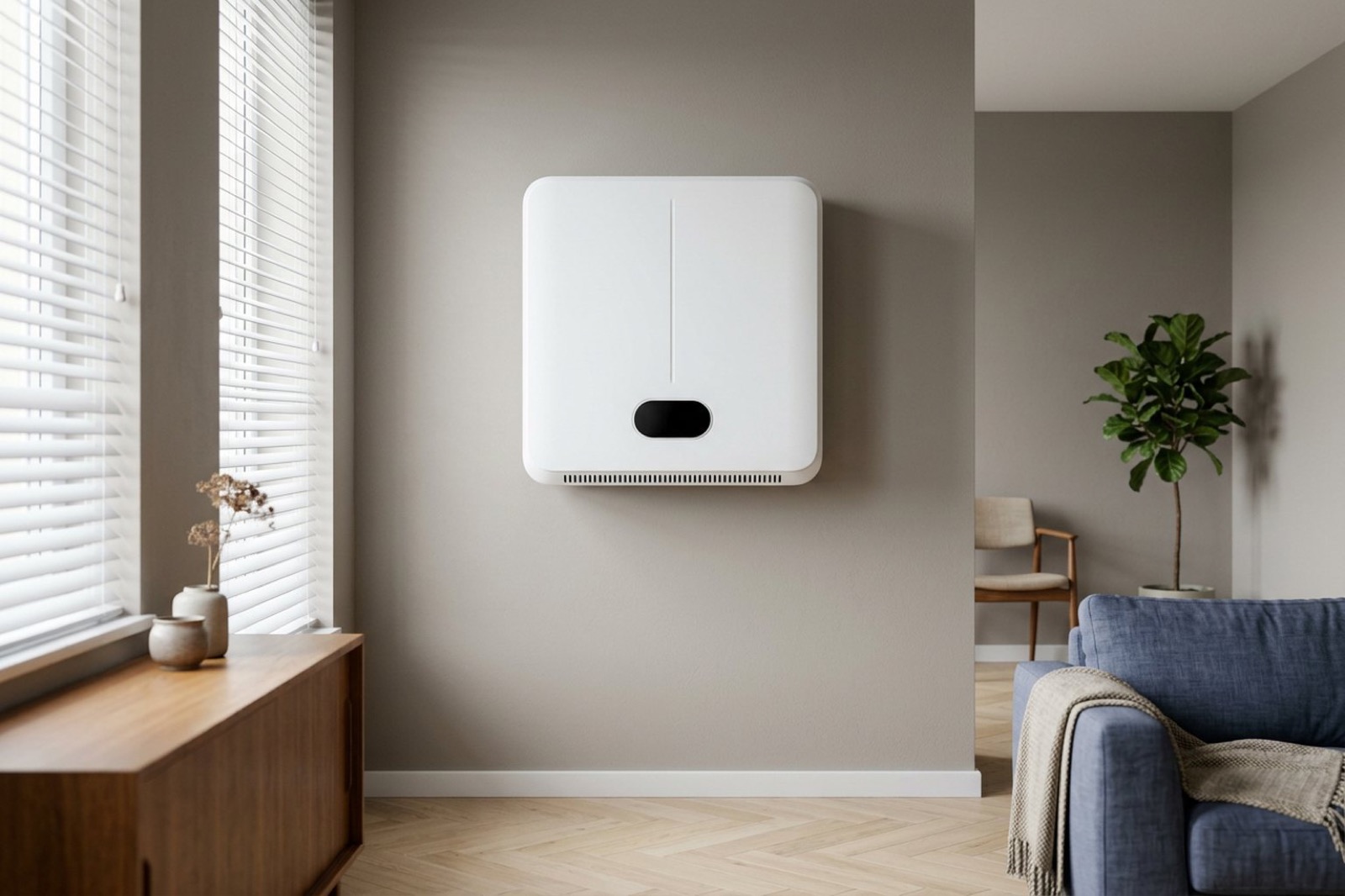
Own a 1 or 2 bedroom flat heated by gas, oil, LPG or electricity? The heat pump we fit in flats — a compact indoor air-to-water unit, installed entirely inside your flat — is 100% covered by the Boiler Upgrade Scheme grant, so you pay nothing. Every one of the 192 flats we’ve had installed so far paid nothing. Book your free, no-obligation assessment.
*Terms and conditions apply. You must own the flat (landlords included); social housing and shared ownership aren’t eligible. It must replace gas, oil, LPG or electric heating, and the flat must not have had government heat pump funding before. Ofgem must approve the Boiler Upgrade Scheme grant, and our assessment and the installer’s heat loss survey must confirm the unit suits your flat. Any lease or freeholder consent must be in place. Installation is by our partner MCS certified installer, and the offer is subject to grant funding being available.
The short version
- Ofgem says owners of multiple properties may apply for a voucher for each legally separate property, and only one voucher can be redeemed per property. A heat pump may be free of charge for an eligible flat, subject to survey and eligibility.
- We found no cap on how many properties, vouchers or applications one owner can have. That is not a statement that no limit exists.
- Every flat is tested on its own: who owns it, what heats it, whether it is social housing and whether it has had a grant before.
- The scheme is not permanent: its final voucher issue date is 31 December 2029, and Ofgem cannot issue new vouchers once the budget threshold is met.
This guide is for a landlord with a small portfolio, for example two to ten flats in one block or across several buildings. It sets out what GOV.UK, Ofgem and the scheme regulations say, and where they say nothing. It does not give tax, rent, minimum energy standard or tenancy-law advice. For a single let flat, see our guide for a landlord with one flat, and for the wider picture see heat pumps for landlords.
Each flat is its own property
Ofgem’s installer guidance (version 5.2, the current version when we read it on 13 November 2026) says owners of multiple properties may apply for a voucher for each legally separate property, and that only one voucher can be redeemed per property. GOV.UK puts it simply: you can get one grant per property. So the question for a portfolio is never answered once for all the flats. It is answered flat by flat.
In practice, our reading is that each flat is assessed, quoted and applied for on its own. Ofgem’s guidance also says an owner can consent to only one voucher application per property at a time. Consenting to one application for a flat rejects any others for that flat.
Is there a limit on how many flats?
We looked for one and did not find it. The table sets out what we searched and what each source says.
| Question | What the sources say |
|---|---|
| May an owner apply for more than one property? | Yes. Ofgem says owners of multiple properties may apply for a voucher for each legally separate property |
| Is there a maximum number of properties, vouchers or applications per owner, company or installer? | We found none in the GOV.UK scheme pages, regulations 2, 3, 5, 9A, 14 and 15, or the Ofgem guidance. Absence from the pages we read does not prove there is no limit, so ask |
| Can one voucher cover two flats? | No. One grant per property, and only one voucher can be redeemed per property |
| Is there any cap at all? | Scheme-wide only: the regulations tie voucher issue to a budget allocation, and the Secretary of State may introduce a quarterly cap on vouchers Ofgem can issue. Neither is a limit per owner |
On what makes two flats “legally separate”, Ofgem says it may request evidence such as a Unique Property Reference Number, council tax liability, planning documents or mapped evidence. That paragraph sits in a section about buildings on the same land as another property, such as an annex, so we do not claim how it applies to flats in a block. Ask us if you are unsure.
Each flat is tested on its own
The eligibility tests attach to the property, so two flats owned by the same person can have different answers. These are the main ones, as the sources word them:
- Not social housing. Regulation 5 says an eligible property is not social housing, with the meaning in section 68 of the Housing and Regeneration Act 2008. Ofgem says a property sold through Right to Buy (or a similar scheme) and now privately owned is not classified as social housing and may be eligible.
- The heating being replaced. GOV.UK says it must be replacing fossil fuel heating systems such as oil, gas, electric or LPG. Ofgem says an electric heating system must not include a heat pump, and that if the previous system includes a heat pump providing space heating, the property is not eligible.
- Earlier funding. GOV.UK says you cannot get a grant for a property already given government funding or support for a heat pump or biomass boiler. Regulation 5 words its test by address: no previous grant from public funds for a heat pump or biomass boiler at the same address. Our reading is that this looks at each flat’s own address, but the guidance we read does not say more, so ask us if you bought a flat from someone else. GOV.UK says funding for insulation does not by itself stop you being eligible.
- New builds. GOV.UK lists most new build properties as not eligible, and says new builds which the developer is still building are not eligible. If a flat is in a recent development, ask us.
Shared ownership needs care. Section 70 of the 2008 Act treats accommodation occupied under shared ownership arrangements as low cost home ownership, and section 68 counts that as social housing, but only where it is made available under rules for people whose needs are not adequately served by the commercial housing market. Ofgem’s description of social housing also mentions shared ownership schemes for people in housing need, but the guidance we read gives no clearer rule for shared ownership flats, so we do not say they are excluded or eligible. This is not legal advice: if a flat in your portfolio is held under a shared ownership lease, ask us before assuming anything.
Owners, companies and joint owners
Portfolios are often held in a company or by more than one person, and the guidance deals with each set-up. Ofgem’s wording, in short:
- More than one owner of a flat. The regulations say a reference to the owner includes any person who is an owner. Consent from one owner is sufficient if they confirm they have authority to act on behalf of all owners.
- A company or other organisation. Installers give the details of an individual who can legally represent it, such as a director or company secretary. If it is not listed on Companies House, a letter of authorisation is needed.
- A trust. An individual representing the trust is named as owner, and all beneficiaries must be individuals.
Ofgem may ask for evidence of ownership during an audit, such as title deeds or mortgage statements. Our reading is that where different flats are held by different owners or companies, the owner of each flat gives the consent for that flat, because the consent is tied to the property. The guidance we read does not describe a single consent covering several properties, so do not assume one.
Telling the tenant in each flat
Where the owner does not occupy the property, regulation 14(2)(a)(vii) says the owner has informed the tenant, if there is one, of the impact of the installation. Ofgem’s guidance lists the same duty for an owner who is a landlord. Our reading is that this applies to each let flat, because the confirmation is made about the property being applied for.
The sources ask for the tenant to be informed. We found no requirement in them for the tenant’s consent. Nothing here is advice on tenancy agreements, access, notice periods or rent. The survey needs access, so agreeing times with each tenant early is practical advice, not a scheme rule. See what to expect from a heat pump survey.
Blocks with shared heating
If your flats are in one building, you may wonder about a single system for all of them. Ofgem’s guidance is direct on one point: cascade systems heating multiple unrelated properties, such as flats, are not eligible. A cascade, in its words, is two or more heat pumps hydraulically linked to serve a single property (and any related properties), and only one voucher may be issued for the entire system. Separately, it says a system funded by the scheme must fully replace the property’s existing fossil fuel or electric heating system.
Beyond that, we found no passage in the sources we read that says how a flat served by a communal boiler or a heat network is treated, so we do not say whether such a flat is eligible. Whether a flat in a block has its own heating, and whether the lease or freeholder has a say, are questions for the survey and for your lease. See leasehold flats and permission in a flat.
Several applications, voucher timing and the budget
The Boiler Upgrade Scheme is not permanent. Here is what the sources say, and no more:
- Final issue date. Regulation 15(7)(c) says the Authority must refuse to issue a voucher after 31 December 2029.
- Voucher validity. A voucher for an air-to-water heat pump expires at the end of the day that falls three months after it is issued (regulation 15(2)(a)), and Ofgem cannot extend it. GOV.UK says the heat pump must be commissioned and installed within 120 days of applying, so plan around whichever limit comes first.
- Budget threshold. Ofgem cannot issue any new vouchers once the budget threshold has been met, though a valid voucher already issued will still be paid after a successful claim.
- Queue and cap. If the budget runs out, Ofgem may operate a queue, with position based on when the application is deemed properly made, which Ofgem defines as once it has the information it needs, owner consent and identity verification. The Secretary of State may also introduce a quarterly cap, with a notice published before the quarter begins.
Inference, not a scheme rule: because each flat has its own application, voucher and validity period, each flat also has its own place in that order. A voucher for one flat does not extend another flat’s, so it is sensible to ask how many installations a team can complete within each voucher’s validity before you apply for several at once. The sources do not say how Ofgem treats a batch of applications, and we do not either.
Ofgem’s BUS monthly scheme update (figures to 31 October 2026, last updated 11 November 2026) lists “Remaining budget for Year 5 (1 April 2026 - 31 March 2027)” as £62,665,000. Its footnote says the figure includes all undetermined applications and vouchers issued yet to be redeemed, and is a dynamic value. That is a snapshot, not a forecast. We are not forecasting when funds might be used, the next update may differ, and you should check the latest report. Asking for your free survey (assessment) sooner means applications can be made while funding is available, if your flats are eligible.
What to gather before you call
This is practical advice, not a scheme requirement. A short list for each flat makes the first conversation quicker, and it helps us tell you what applies flat by flat:
| For each flat | Why it helps |
|---|---|
| Address and number of bedrooms | ByEco’s offer box describes 1 and 2 bedroom flats; tell us if any of yours differ |
| Who owns it, and how (person, joint owners, company, trust) | Decides who consents and, for a company, who can legally represent it |
| What heats it now, and any photographs or a recent bill | Ofgem asks for evidence of the heating being replaced |
| Any earlier heat pump, grant or new-build status | These can make a property ineligible |
| Lease terms and freeholder or managing agent details | The sources do not address leasehold; your lease may |
| Tenant details and a convenient time for access | The owner has informed the tenant; the survey needs access |
Our application checklist covers one application, and the step-by-step guide shows what follows.
How to start, and where ByEco stands
Call 0161 710 4510 or use the contact page, tell us how many flats you own and send the details above for each. Our free survey (assessment) is how we find out which flats are eligible and what applies to each, and we do not assume the answer is the same for all of them. A heat pump may be free of charge for an eligible flat, subject to survey and eligibility; whether anything is left to pay for a flat is confirmed in the quote after the survey, and ByEco’s offer for eligible 1 and 2 bedroom flats is described in the offer box at the top of this page.
GOV.UK describes the grant as £7,500 towards an air source (air-to-water) heat pump, a grant to cover part of the cost. Ofgem says the installer must deduct the full grant from the quote before you pay, and GOV.UK says the installer will apply on your behalf on the Ofgem website. Worth asking any installer what happens if an application is rejected: Ofgem says the installer’s ability to seek payment of the deducted amount then depends on the contract between you and the installer, so read the contract before you sign.
ByEco is MCS certified for air source heat pump installation (certificate IAA10330). For background, see the Boiler Upgrade Scheme guide, our heat pumps and grants pages, and, to see who may be eligible, can you get a free heat pump? When you are ready, get in touch for your free survey.
Sources
Every figure on this page was checked against primary sources on 13 November 2026. Grant rules, planning rules and prices change — if you are reading this much later, verify before acting.
- GOV.UK — Apply for the Boiler Upgrade Scheme: check if you’re eligible
- GOV.UK — Apply for the Boiler Upgrade Scheme: what you can get
- GOV.UK — Apply for the Boiler Upgrade Scheme: how to apply
- GOV.UK — Apply for the Boiler Upgrade Scheme
- Ofgem — Boiler Upgrade Scheme: guidance for installers
- Ofgem — Boiler Upgrade Scheme guidance for installers V5.2 (PDF)
- Ofgem — BUS monthly scheme update
- legislation.gov.uk — Boiler Upgrade Scheme (England and Wales) Regulations 2022, regulation 2
- legislation.gov.uk — Boiler Upgrade Scheme (England and Wales) Regulations 2022, regulation 5
- legislation.gov.uk — Boiler Upgrade Scheme (England and Wales) Regulations 2022, regulation 14
- legislation.gov.uk — Boiler Upgrade Scheme (England and Wales) Regulations 2022, regulation 15
- legislation.gov.uk — Housing and Regeneration Act 2008, section 68
- legislation.gov.uk — Housing and Regeneration Act 2008, section 70
Book your free home survey
Every home is different. The cost depends on the size of system, any radiators that need upgrading, the pipework and where the outdoor unit goes. Get in touch and we will arrange a free survey of your home and give you a clear quote. If you are happy with it, we can go ahead.