The short version
- The first step is to get in touch for a free survey (the assessment), so ByEco can check whether your home is eligible. A heat pump may be free of charge for eligible smaller houses and flats, subject to survey and eligibility.
- Have ready: proof of ownership if asked, what heats the home now with photographs and a recent bill, access arrangements, any lease papers, where the fuse board and meter are, and any plans for solar panels or an EV charger.
- ByEco applies to Ofgem on your behalf. You confirm consent by email within 14 days, Ofgem may verify your identity, and the full grant is deducted from the quote before you pay.
- The Boiler Upgrade Scheme is not permanent: its final voucher issue date is 31 December 2029. Ofgem’s latest monthly update shows £143,585,000 of the 2026–27 budget remaining, a figure that changes monthly.
This is the practical checklist for the very first step of getting a heat pump that may be free of charge for eligible smaller houses and flats, subject to survey and eligibility. It does not repeat the whole process: for that, see our step-by-step guide for an eligible flat. For who may qualify, read free heat pump for flats and can you get a free heat pump?
Your checklist at a glance
| Have ready | What to gather | Why it comes up |
|---|---|---|
| Ownership | Who owns the property; where the title deeds or a mortgage statement are kept | Ofgem asks the owner to confirm ownership, and may ask for evidence later |
| Current heating | Photographs of the boiler or heater, its nameplate and where it sits | Ofgem typically asks for evidence of the heating being replaced |
| A recent bill | A utility bill or fuel receipt from the last three months, showing the address and usage | The same evidence request |
| Access | Who can let the surveyor in, and when; any building manager or concierge | The installer must assess the property on site |
| Lease papers | Your lease and your freeholder or managing agent’s contact details, if you have them | Permission may be needed before work starts |
| Electrics | Where the fuse board and electricity meter are | The supply must be adequate for the heat pump |
| Plans | Any plan for solar panels or an EV charger | They share your electricity supply |
| Email and ID | An email address you check; be ready to send ID if Ofgem asks | Ofgem asks for your consent by email and may verify who you are |
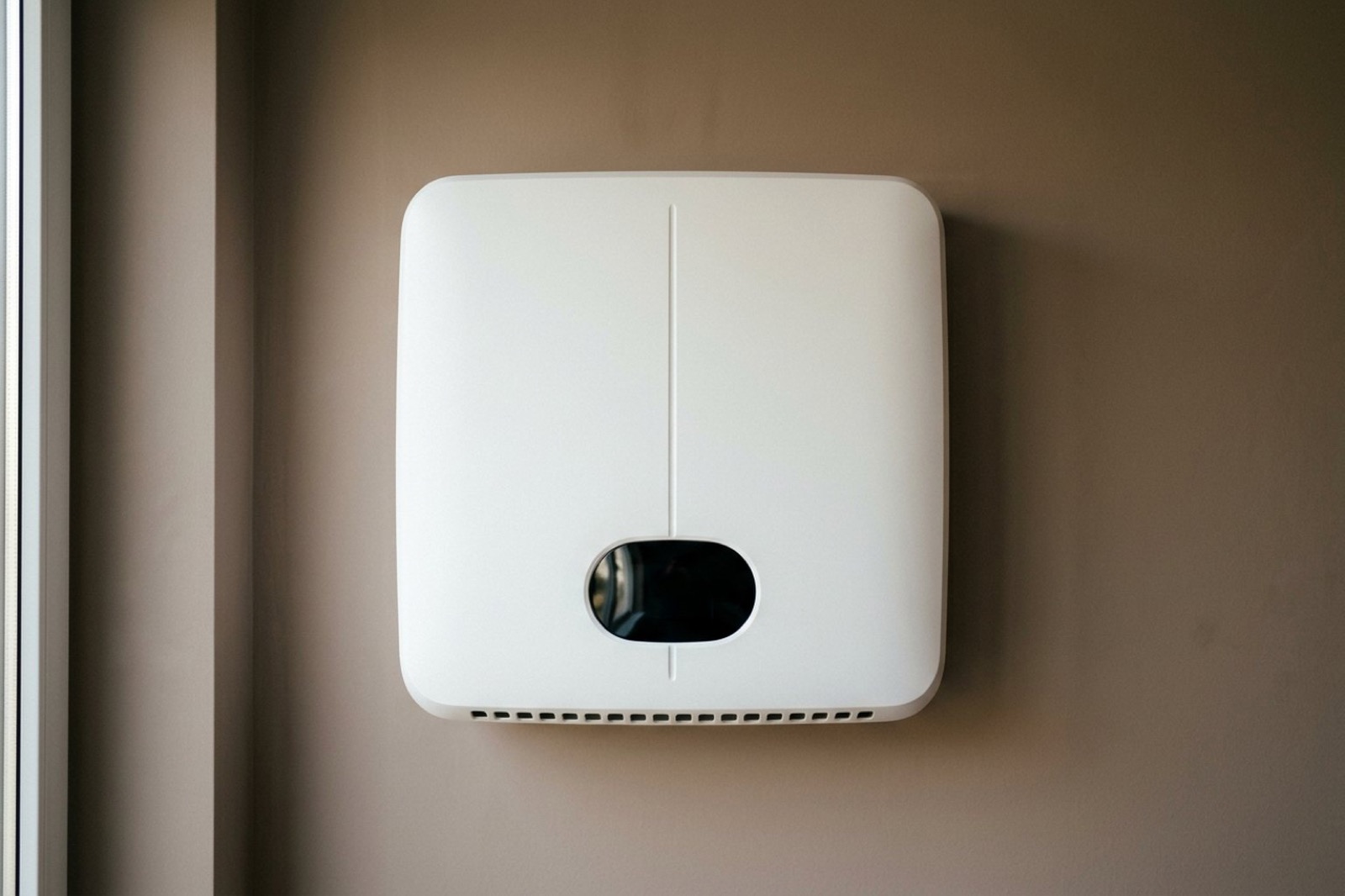
Who owns the property, and what proof may be asked for
GOV.UK’s eligibility test starts with ownership: you must own the property you are applying for, which GOV.UK says includes a business, a second home or a property you rent out to tenants. You must also be replacing fossil fuel heating, such as oil, gas, electric or LPG.
Ofgem’s installer guidance (version 5.2) says the owner confirms their full name, and ownership of the property or co-ownership with the agreement of all other owners. It names no ownership document to send up front for a retrofit (self-build applications are treated differently). It does say, in its note on multiple owners, that during audit or compliance investigations additional evidence may be required to prove ownership, such as title deeds or mortgage statements. So it is sensible to know where yours are kept.
Tell us early if any of these apply, because Ofgem’s guidance handles each differently:
- Joint owners. Consent from one owner is enough if they confirm they have authority to act for all owners.
- A trust or an organisation. An individual who can legally represent the trust or organisation must be named as the owner on the application.
- A lasting power of attorney. Consent should then be provided by the attorney.
What heats your home now: photographs and a recent bill
Ofgem’s guidance says the evidence it will request about the heating being replaced typically includes a recent utility bill or fuel receipt and photographs of the existing heating system, and that installers should get this from the owner before applying where possible. Ask which items your property needs.
- Photographs. They must clearly show the heat source (for example a gas boiler, oil boiler, electric boiler, plug-in wall radiators or a fuel tank), its make and model (for example the nameplate on a boiler) and where it is.
- A bill or receipt. It must be dated within the last three months, show your installation address, and include all pages or show usage figures. A fuel receipt is used for LPG, coal or oil. You may redact account and financial details.
The upload is the installer’s job, not yours: Ofgem’s guidance says it is the installer’s responsibility to gather and upload the supporting evidence. Your part is to find the items and hand them over. For what the survey itself covers, see what to expect from a heat pump survey.
Access, the fuse board and meter, and plans for solar or an EV charger
Ofgem requires the installer to carry out an on-site assessment and be satisfied the property and chosen technology meet the eligibility requirements. That is why the first visit matters. The points below are practical advice, not scheme rules:
- Access. Tell us who can let the surveyor in and when. In a block, say whether a building manager, concierge or managing agent controls entry to shared areas.
- The fuse board and meter. Note where they are, and whether they sit in a shared cupboard or a communal area. MCS design rules (MIS 3005-D) require the installer to ensure the electricity supply is adequate for the size of heat pump specified, and to have the building assessed by a competent professional so that the works do not compromise Building Regulations compliance, in particular electrical safety. See heat pumps and your electricity supply.
- Solar panels. If you are also thinking about solar, say so at the start; see heat pumps and solar panels. We make no claim here that solar can be free.
- An EV charger. A charger and a heat pump both draw on the same supply, so tell the surveyor if you plan one. Our guide to running a heat pump and an electric car charger together explains why.
Lease, freeholder, tenants and co-owners
If your home is a flat, or has a lease, bring the lease and a contact for the freeholder or managing agent. Our guide to permission for a heat pump in a flat covers what to check and when to ask.
On eligibility, be careful with what you read elsewhere. GOV.UK’s test is that you “own the property you’re applying for”. The GOV.UK Boiler Upgrade Scheme pages, Ofgem’s version 5.2 guidance and regulations 14 and 15 of the Boiler Upgrade Scheme Regulations do not mention leasehold or freehold at all. No source we read spells out how a leasehold flat is treated, so we do not say leaseholders qualify and we do not say they are excluded. The survey and your installer confirm how ownership will be shown.
If you do not live in the property, Ofgem asks you to confirm that you have told your tenant about the impact of the installation. See heat pumps for landlords.
What ByEco does and what you do
GOV.UK describes the order: confirm you are eligible (your installer will tell you), agree a quote, then the installer applies on your behalf on the Ofgem website.
| Stage | ByEco, as installer | You, as owner |
|---|---|---|
| Assessment | Assesses the property on site and checks eligibility | Give access; answer questions |
| Quote | Quotes with the grant as an upfront discount | Read it; ask questions; decide |
| Application | Applies on your behalf and uploads the evidence | Supply the items above |
| Consent | Is told once you have consented | Use Ofgem’s emailed link within 14 days |
| Identity | Nothing further | Answer any request from Ofgem within 14 days |
| Payment | Deducts the full grant from the quote and invoice | Pay only the balance, if any |
Consent, identity and what you confirm
Once the application is submitted, Ofgem emails you from boiler.upgrade.scheme.
Consent must come from you, as the owner, personally. Ofgem also tells owners it will verify their identity, which may include sending digital copies of ID documents, and you have 14 days to answer a request for more. As part of consent you confirm, among other things, that the property is not social housing, that you have had no other public support for this installation, and that you received the grant as an upfront discount.
If you are collecting several quotes, note that an owner can only consent to one voucher application per property at a time; consenting to one rejects the others.
The full grant comes off before you pay
Ofgem’s guidance says installers must deduct the full grant value from the quote before any payment is made by the owner, and that installers must not request or accept payment of the grant amount from you. GOV.UK says the grant is taken off the amount you pay and is shown on your quotation and invoice. For what drives cost, see our cost guide.
Why the date your application is “properly made” matters
Ofgem treats an application as “properly made” only when it has all the information needed to assess eligibility, any further information it asked for has been supplied, and the owner has confirmed consent and identity verification. The date matters for three reasons:
- Regulation 15(4) says Ofgem must consider properly made applications in the order in which it receives them.
- If the available budget runs out, Ofgem may operate a queue, and Ofgem says queue position is based on when the application is deemed properly made.
- Ofgem cannot issue new vouchers once the budget threshold has been met. A voucher already issued and still valid will still be paid after a successful claim.
Your consent and identity check are in your hands. We are not saying a queue is running now. If one ever did operate, your place would follow the date your application was properly made, and a missing document or an unread consent email would push that date back.
Voucher validity, the final issue date and why it is sensible to ask early
The Boiler Upgrade Scheme is not permanent. Here is exactly what the sources say, and no more:
- Voucher validity. Under regulation 15(2)(a), a voucher for an air source heat pump expires at the end of the day that falls three months after it is issued. Ofgem cannot extend it. If it lapses, the installer can apply for a new one, but Ofgem says budget for re-applications cannot be assumed.
- GOV.UK’s wording differs. GOV.UK says the installer must commission and install the heat pump within 120 days of applying. The two are worded differently, so plan for the shorter and get lease permission settled before the application.
- The final issue date. The regulations say Ofgem must refuse to issue a voucher after 31 December 2029.
- Budgets. The Secretary of State sets the scheme budget. Ofgem publishes monthly reports of the remaining annual budget, and the Secretary of State may introduce a quarterly cap on the vouchers Ofgem can issue.
So the scheme has an end date, its funding is set in budgets, and no new vouchers can be issued once a budget threshold is met. Asking for your free assessment sooner means your application can be made while funding is available, if your home is eligible.
Ofgem has not, on the pages we read on 8 November 2026, announced that the budget has been met, that a queue is operating or that a quarterly cap applies. Its BUS monthly scheme update (figures to 30 September 2026, last updated 13 October 2026) shows £143,585,000 remaining for 1 April 2026 to 31 March 2027. Ofgem says that figure includes undetermined applications and vouchers not yet redeemed, and that it changes as vouchers expire or are returned. We cannot tell you how long the budget will last, and the next update may differ. Rules and funding can change, so ask early.
Your first step, and where ByEco stands
Call 0161 710 4510 or use the contact page, and tell us what kind of property you have, who owns it, what heats it now and whether you have a lease. Photographs of the existing heating help. The survey is free, and it is how we find out whether your home is eligible and what applies.
ByEco’s view is that smaller homes and flats need less material and less labour than bigger houses, which is why ByEco can offer a heat pump free of charge under the scheme for eligible properties, subject to survey and eligibility. That is ByEco’s own explanation, not a scheme rule or a promise, and we do not define “smaller” by a number.
Worth asking any installer: how will you show I own the property, when will the application be made, and what does the contract say if it is rejected? Ofgem’s guidance says the installer’s ability to seek payment of the deducted amount then depends on the contract between you and the installer.
ByEco is MCS certified for air source heat pump installation (certificate IAA10330), and we apply for the £7,500 Boiler Upgrade Scheme grant on your behalf. For background, see the Boiler Upgrade Scheme guide, our heat pumps and grants pages, and get in touch for your free survey.
Sources
Every figure on this page was checked against primary sources on 8 November 2026. Grant rules, planning rules and prices change — if you are reading this much later, verify before acting.
- GOV.UK — Apply for the Boiler Upgrade Scheme: how to apply
- GOV.UK — Apply for the Boiler Upgrade Scheme: check if you’re eligible
- GOV.UK — Apply for the Boiler Upgrade Scheme: what you can get
- Ofgem — Boiler Upgrade Scheme: guidance for installers
- Ofgem — Boiler Upgrade Scheme guidance for installers V5.2 (PDF)
- Ofgem — BUS monthly scheme update
- legislation.gov.uk — Boiler Upgrade Scheme (England and Wales) Regulations 2022, regulation 14
- legislation.gov.uk — Boiler Upgrade Scheme (England and Wales) Regulations 2022, regulation 15
- MCS — MIS 3005-D The Heat Pump Design Standard, Issue 3.0
Book your free home survey
Every home is different. The cost depends on the size of system, any radiators that need upgrading, the pipework and where the outdoor unit goes. Get in touch and we will arrange a free survey of your home and give you a clear quote. If you are happy with it, we can go ahead.