The short version
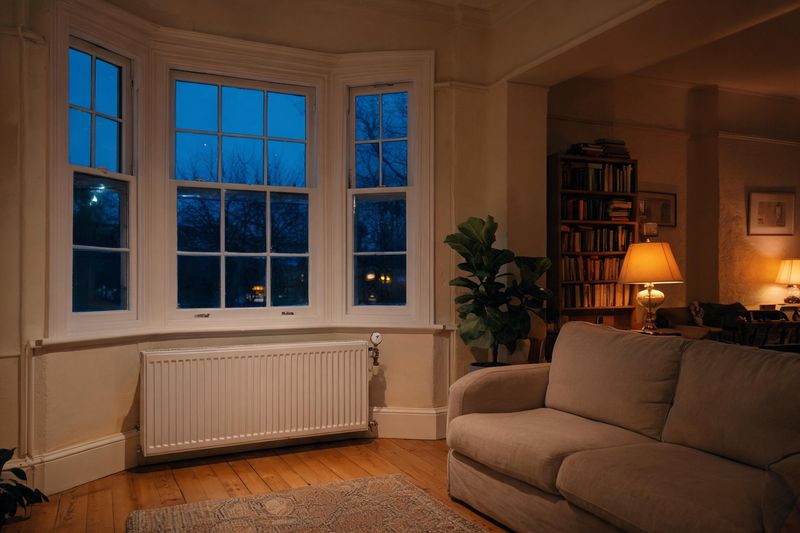
- No, you do not need underfloor heating. A heat pump works well with radiators that are correctly sized, and that is how most UK homes are fitted.
- The evidence backs radiators. In the government-funded Electrification of Heat trial, 93% of homes had new emitters fitted and almost all were radiators — standard (33%) or low temperature (57%) — not underfloor heating.
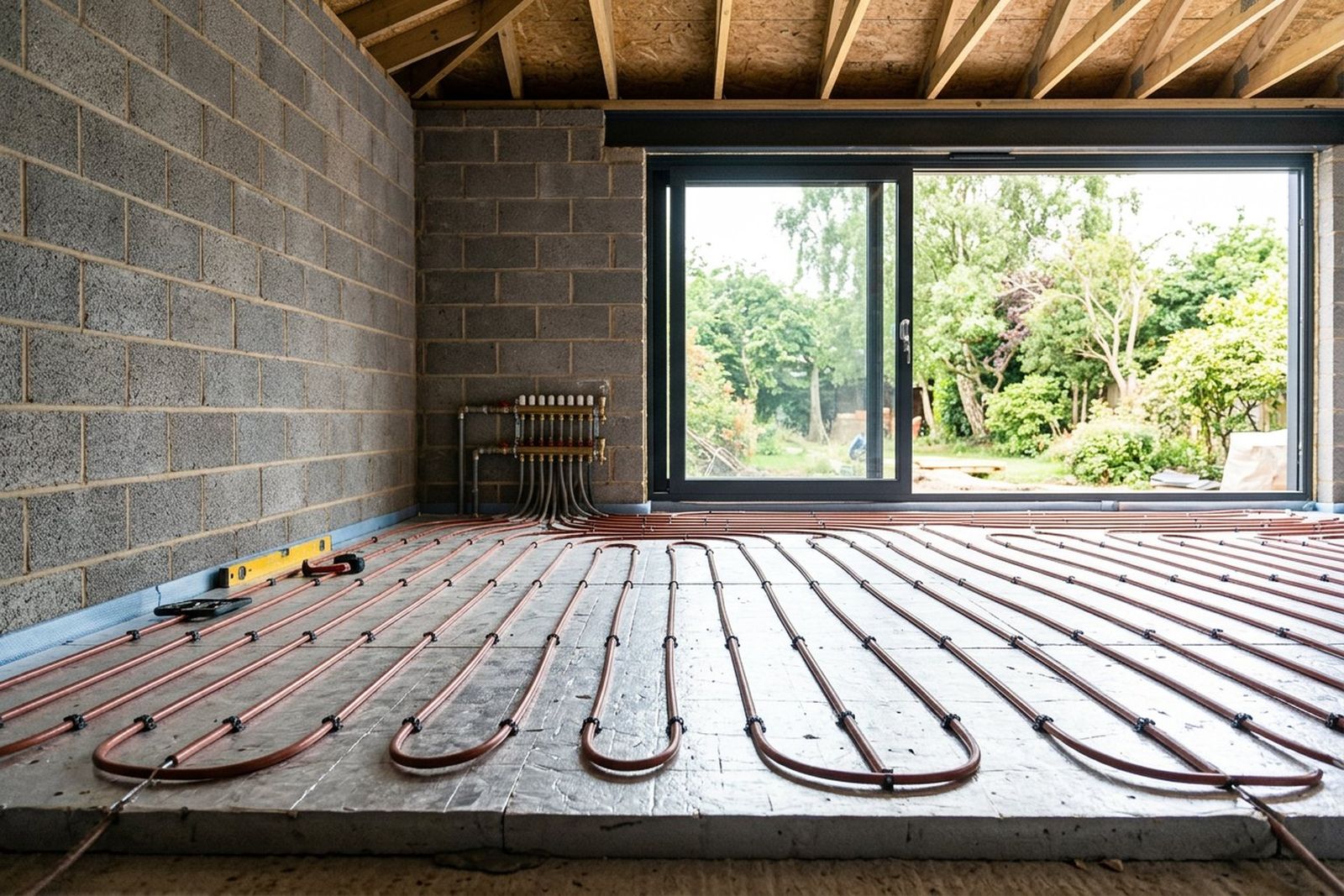
- Underfloor heating does suit a heat pump. Its large surface area warms a room with cooler water, and cooler water means a more efficient heat pump.
- Retrofitting it is disruptive. It is usually only worth fitting where a floor is coming up anyway — a new extension, a new floor or a full renovation.
- The survey decides. What matters is a room-by-room heat loss calculation and emitters designed to a sensible flow temperature, whether that is radiators, underfloor heating or both.
Underfloor heating and heat pumps are often mentioned in the same breath, which leaves many people thinking you cannot have one without the other. You can. Here is what underfloor heating actually brings to a heat pump, what it costs you in disruption to retrofit, and why the honest answer for most homes is “radiators, sized properly”.
Do you need underfloor heating for a heat pump?
No. A heat pump heats water and sends it round whatever emitters you have. It just works most efficiently when that water is cooler than a gas boiler would use, so it needs enough emitter surface area to keep rooms warm at that lower temperature. Radiators of the right size do that perfectly well.
The clearest evidence is the Electrification of Heat demonstration project, a government-funded trial that put heat pumps into a representative range of British homes. Its install report found that 93% of homes had new heat emitters fitted, and that “in most cases these were either standard (33%) or low temperature radiators (57%)”. Underfloor heating does not feature in that breakdown. The same report notes that replacing emitters “may not always be necessary” — some existing radiators are already big enough.
The design rulebook agrees. The MCS heat pump design standard, MIS 3005-D, requires the system to be sized to deliver 100% of the home’s calculated heat load through its emitters, whatever type they are. Nothing in it requires underfloor heating. For the detail on sizing and when radiators need upgrading, see our guide to whether you need new radiators for a heat pump; this article focuses on underfloor heating.
Why underfloor heating suits a heat pump
Underfloor heating (UFH) works well with a heat pump for one main reason: a whole floor is a very large emitter, so it can warm a room with much cooler water than a radiator needs. The MCS heat emitter guide puts it plainly — a heat pump’s “performance is optimised if low-temperature heat emitters are used”, and it rates emitters with up to six stars, awarding “more stars … when lower heat emitter temperatures are used because the heat pump is able to operate more efficiently”.
That efficiency gain is real and measurable. In the Electrification of Heat performance study, the median heat pump produced far more heat per unit of electricity when it ran cooler:
| Flow temperature | Median COP (units of heat per unit of electricity) |
|---|---|
| 35°C | 3.50 |
| 55°C | 2.38 |
| Above 65°C | 2.02 |
Source: Electrification of Heat, Heat Pump Performance Data Analysis Report (December 2024), section 1.4.4. Medians of half-hourly readings across the trial’s air source and ground source heat pumps.
Wet underfloor heating is normally designed to run at the low end of that range — the MCS heat emitter guide shows it meeting rooms’ needs at flow temperatures of around 35 to 45°C, where a heat pump is at its most efficient. Radiators for a heat pump are typically designed higher; MIS 3005-D says high-temperature heat pumps “should be avoided unless the application requires a flow temperature higher than 55°C”. So underfloor heating lets a heat pump sit at the efficient end of the scale, and it gives a gentle, even warmth across the floor. It is not the only way to reach a low flow temperature, though — generously sized radiators get there too. Our guide to how much electricity a heat pump uses explains why the running flow temperature matters so much.
Underfloor heating vs radiators with a heat pump
Both work with a heat pump. The honest trade-off is comfort and efficiency against cost and disruption, and it looks like this:
| Underfloor heating | Radiators | |
|---|---|---|
| Flow temperature | Lower (around 35–45°C), so very efficient | Higher, though correctly sized radiators still run cool enough for a heat pump |
| Comfort | Even, gentle warmth across the whole floor; no hot surfaces or wall space used | Warmth comes from fixed points on the wall |
| Response | Slower to warm up and cool down because of the mass of floor and screed | Faster to respond |
| Fitting in an existing home | Disruptive — usually means lifting or building up the floor | Quicker and cheaper to swap or upsize |
Neither choice is about saving a fixed amount of money, and this article does not put figures on either. A heat pump run “low and steady” suits the slow, even nature of underfloor heating well; if you want the detail on settings, see how to run a heat pump efficiently. For most retrofits, upsizing radiators where a room falls short is the simpler route, which is why the great majority of UK heat pump installs use radiators.
Retrofitting underfloor heating: options and downsides
Fitting wet underfloor heating into a house that does not have it is the hard part, and the reason it is usually reserved for floors that are being opened up anyway. The main routes are:
- Screeded systems. Pipes are laid on insulation boards and buried in a screed. This is the traditional, high-output approach, but it means either digging out the existing floor or building the level up, which affects door heights, skirtings and the step at thresholds, and the screed needs time to dry. It is normally reserved for a new floor, a new extension or a full renovation.
- Low-profile or overlay systems. These lay over an existing floor to keep the build-up small. The manufacturer Nu-Heat describes its LoPro10 system as just “15mm thick” and “laid directly over an existing floor” so you avoid “the cost and disruption of digging up your floors”; it says that “in a well-insulated property, LoPro10 can work with both heat pump and boiler systems”. Even a slim system still raises the floor a little.
- Suspended timber floors. Where you have floorboards over joists, pipes can be fitted between or on top of the joists with spreader plates. It avoids a screed but still means lifting the floor and getting insulation right underneath.
Two things make or break a retrofit. First, insulation under the pipes matters: without it, heat goes downwards instead of up into the room, so the floor has to run hotter and you lose the efficiency that made underfloor heating worth fitting. Second, a floor can only emit so much heat per square metre, so in a poorly insulated room with a high heat loss, underfloor heating alone may not keep up at a low flow temperature — which is exactly why it tends to go in alongside other improvements. These are general points about how underfloor heating behaves; your installer should confirm what a specific floor can deliver.
Mixing underfloor heating and radiators
A common plan is underfloor heating downstairs, where the floor is easier to reach, and radiators upstairs. That is fine with a heat pump, but it raises one wrinkle: the two like different water temperatures — cooler for the floor, warmer for the radiators — while the heat pump sends out a single flow temperature.
There are two ways round it. The system can be designed so that everything, radiators included, runs at the lower underfloor temperature (this usually means larger radiators). Or the underfloor circuit can be blended down to a cooler temperature with a mixing valve while the radiators take the warmer water; the manufacturer Emmeti describes mixing units “designed to combine areas heated by underfloor heating with areas where radiators are installed”, so there is “high-temperature water flowing in the radiator area and low-temperature water flowing in the underfloor heating area”. MIS 3005-D expects this: when it defines the design flow temperature, it refers to the water “leaving the heat pump and before any blending valves”. Which approach is right is a design decision for the survey, not a rule of thumb.
Why the survey decides, not a rule of thumb
Whether your home wants radiators, underfloor heating or a mix is not something an article can answer, and it is not decided by the heat pump. It is decided by a proper survey. A good installer calculates the heat loss of each room and then designs the emitters to meet it at a sensible flow temperature. Under MIS 3005-D, before the work starts you should be given, in writing, the specific heat loss of each room, the type and size of every emitter, “the design emitter temperature based on the worst performing room” and the design flow temperature leaving the heat pump.
Because of that, the cost of a heat pump installation depends entirely on your property — the size of system it needs, whether any radiators or pipework have to change, where the outdoor unit goes and how far the pipe run is, how hot water is provided and any electrical work. There is no standard price, and we do not quote one here; our heat pump cost guide explains what drives it. The sensible step is a survey and an itemised quote, so you can decide with the numbers in front of you.
On funding, you may be eligible for the £7,500 Boiler Upgrade Scheme grant towards an air source heat pump in England and Wales; an installer applies for it and takes it off your quote. It can only be claimed through an MCS-certified installer, and ByEco’s MCS and TrustMark certification is in progress. Our Boiler Upgrade Scheme guide covers who qualifies.
What to ask your installer, and where ByEco stands
- What is the heat loss of each room, and what flow temperature is the system designed for?
- Can correctly sized radiators meet that, or is underfloor heating worth the disruption in any room?
- If we mix underfloor heating and radiators, how will the different temperatures be handled?
- What insulation goes under any underfloor heating, and how much will the floor level rise?
- How will hot water be provided, and what will you give me in writing before work starts?
ByEco is based in Manchester and installs air source heat pumps for homeowners across England and Wales, mostly around Greater Manchester (see heat pump installation in Manchester). We design the emitters — radiators, underfloor heating or both — around a room-by-room heat loss survey rather than a one-size-fits-all rule, and we would rather fit the right radiators than talk you into disruptive floor work you do not need. ByEco’s MCS and TrustMark certification is in progress. For a free home survey and a clear, itemised quote, with no obligation to go ahead, get in touch; you can also read more about our heat pump installations.
Sources
Every figure on this page was checked against primary sources on 22 October 2026. Grant rules, planning rules and prices change — if you are reading this much later, verify before acting.
- BEIS / Energy Systems Catapult — Electrification of Heat Demonstration Project: Home Survey and Install Report (December 2022)
- Energy Systems Catapult for DESNZ — Electrification of Heat: Heat Pump Performance Data Analysis Report (December 2024)
- MCS — MIS 3005-D The Heat Pump Design Standard, Issue 3.0 (5 December 2025)
- MCS — MIS 3005 / MCS 021 Heat Emitter Guide for domestic heat pumps, Issue 2.1
- Ofgem — Boiler Upgrade Scheme: Installer Guidance V5.1 (2 July 2026)
- GOV.UK — Apply for the Boiler Upgrade Scheme: what you can get
- Nu-Heat — LoPro10 low-profile retrofit underfloor heating
- Emmeti — Mixing units: frequently asked questions
Book your free home survey
Every home is different. The cost depends on the size of system, any radiators that need upgrading, the pipework and where the outdoor unit goes. Get in touch and we will arrange a free survey of your home and give you a clear quote. If you are happy with it, we can go ahead.