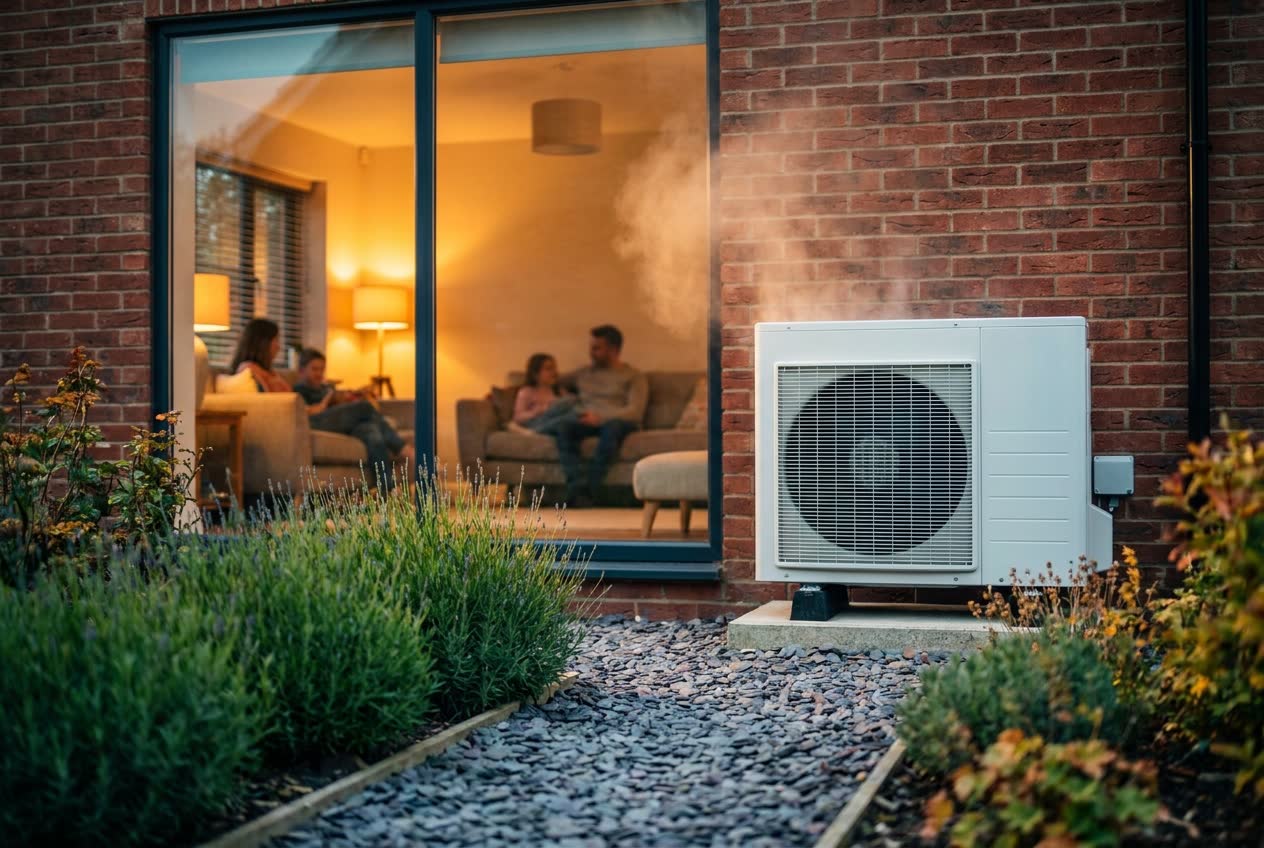
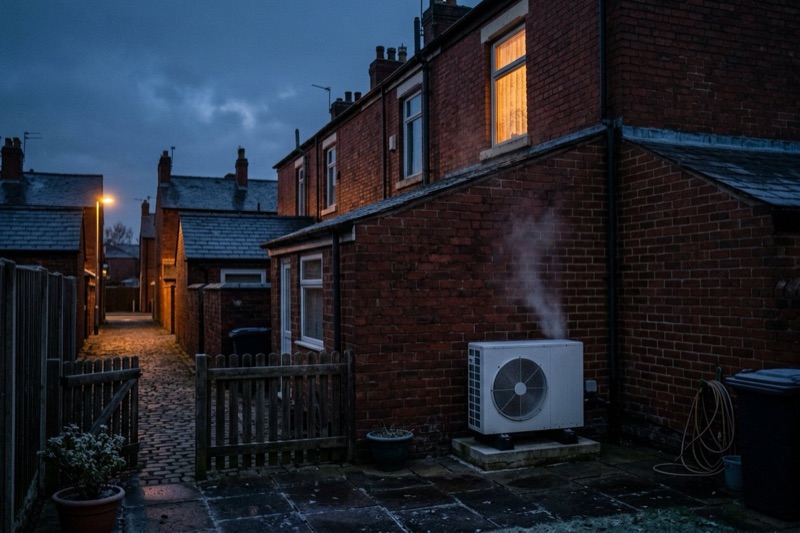
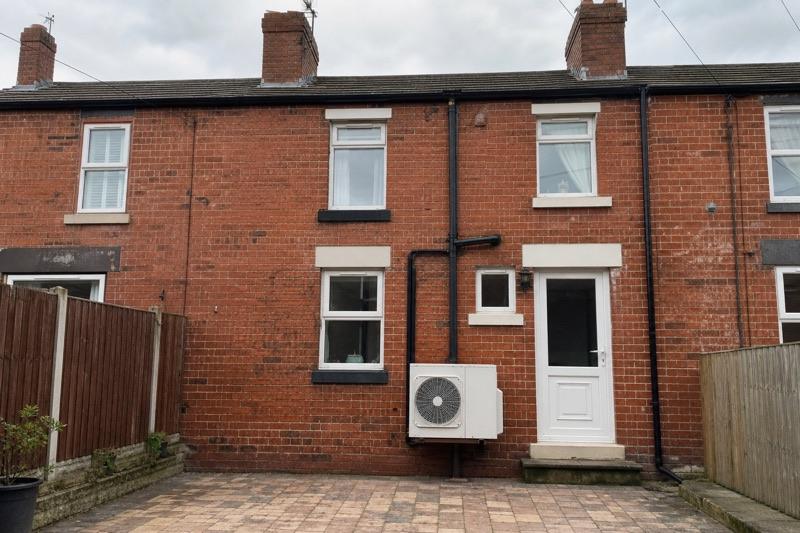
Free heat pump for 1 and 2 bedroom flats and 2 bedroom houses.*
Own a 1 or 2 bedroom flat or a 2 bedroom house heated by gas, oil, LPG or electricity? The heat pump we fit — an indoor or outdoor air-to-water unit, chosen at your survey to suit your home — is 100% covered by the Boiler Upgrade Scheme grant, so you pay nothing. Every one of the 192 flats we’ve had installed so far paid nothing. Book your free, no-obligation assessment.
*Terms and conditions apply. You must own the property (landlords included); social housing and shared ownership aren’t eligible. It must replace gas, oil, LPG or electric heating, and the property must not have had government heat pump funding before. Ofgem must approve the Boiler Upgrade Scheme grant, and our assessment and heat loss survey must confirm the heat pump suits your home. Any lease or freeholder consent must be in place. ByEco installs the heat pump itself, and ByEco is MCS certified for air source heat pump installation (certificate IAA10330). The offer is subject to grant funding being available. Houses with 3 or more bedrooms get a fixed-price quote instead.
The short version
- The cap: Ofgem says the typical household figure rises from £1,723 to £2,166 a year for 1 January to 31 March 2027, a 26% rise. It is a cap on unit rates and standing charges, not a maximum bill.
- Electricity: 26.32p up to 32.69p per kWh, about 24% (Direct Debit, average across England, Scotland and Wales).
- Gas: 7.97p up to 10.96p per kWh, about 38%. Ofgem says gas prices are rising by more than electricity prices.
- Per unit of heat (our calculation from Ofgem and Energy Saving Trust figures, before standing charges): about 10.5p from a typical heat pump, against about 12.9p from a new gas boiler and 14.6p from an older one.
- The offer: ByEco installs a heat pump free of charge for eligible 1 and 2 bedroom flats and 2 bedroom houses under the Boiler Upgrade Scheme, subject to a free survey and eligibility.
Every three months, Ofgem resets the energy price cap, the most suppliers can charge per unit and per day on a standard variable tariff. On 25 November 2026 it announced a large rise for January. This guide sets out the new rates from Ofgem’s own pages, explains why gas and electricity are moving differently, and works through what that means for heating a home with a heat pump instead of a gas boiler. Every figure has its source, and our own calculations are labelled as such.
What is changing on 1 January 2027
Ofgem’s average rates for people paying by Direct Debit across England, Scotland and Wales:
| 1 Oct to 31 Dec 2026 | 1 Jan to 31 Mar 2027 | Change | |
|---|---|---|---|
| Electricity unit rate | 26.32p per kWh | 32.69p per kWh | +24% |
| Electricity standing charge | 54.83p a day | 54.77p a day | about the same |
| Gas unit rate | 7.97p per kWh | 10.96p per kWh | +38% |
| Gas standing charge | 29.68p a day | 29.65p a day | about the same |
| Typical household, a year | £1,723 | £2,166 | +26% |
The percentage changes in the unit rates are our calculation from Ofgem’s figures. Ofgem says the gas rates include 5% VAT, and that there is no VAT on electricity from 1 October 2026 to 30 June 2027. Your own rates depend on your region and how you pay. Ofgem says it will publish the next levels, for April to June 2027, by 23 February 2027.
The government has also announced that around 20 million households will receive £100 towards their energy bill from January, Ofgem says.
Why prices are rising
Ofgem’s explanation is short: “The increase is because of the continued conflict in the Middle East pushing up international gas prices.” It adds that gas prices are rising by more than electricity prices, “reflecting the growing shift in electricity generation away from gas fired power stations to renewables”.
That second point is the one that matters for heating. In October to December 2026, a unit of electricity cost about 3.3 times a unit of gas. From January it is about 3.0 times. The smaller that gap, the better a heat pump compares with a gas boiler.
The cost of a unit of heat: heat pump vs gas boiler
Bills are priced in units of energy you buy, but what you want is heat in the home. The two are linked by efficiency. The Energy Saving Trust says heat pumps “tend to run with a seasonal performance factor (SPF) of 3.1”, meaning about 3.1 units of heat for each unit of electricity across a year. It says a typical new gas boiler runs at around 85% efficiency and an older boiler due for replacement nearer 75%.
Dividing Ofgem’s unit rates by those efficiencies gives the cost of one kWh of heat. These are our calculations:
| Cost of one kWh of heat | 1 Oct to 31 Dec 2026 | 1 Jan to 31 Mar 2027 |
|---|---|---|
| Heat pump, SPF 3.1 | 8.5p | 10.5p |
| Heat pump, SPF 4 | 6.6p | 8.2p |
| New gas boiler, 85% | 9.4p | 12.9p |
| Older gas boiler, 75% | 10.6p | 14.6p |
On these figures, a typical heat pump’s heat costs about 9% less per kWh than a new gas boiler’s in October to December 2026, and about 18% less from January. Against an older boiler, the gap is about 20%, rising to about 28%. The Energy Saving Trust says a good installation that is well managed can reach an SPF “significantly higher than 3.1, sometimes more than 4”, which is why we show SPF 4 as well.
What these figures do not tell you
These are prices per unit of heat, not a promise about your bill. Before you rely on them:
- Standing charges are left out. They are a daily cost whatever you use; see below.
- Efficiency varies. SPF depends on the design, the flow temperature, the radiators and how the system is run. The Energy Saving Trust warns that running a heat pump as though it were a gas boiler can mean unexpectedly high electricity bills. See how to run a heat pump efficiently.
- Averages. Ofgem’s figures are averages across England, Scotland and Wales for Direct Debit; your region and tariff will differ.
- Prices move every three months. The April 2027 levels are due by 23 February 2027, and we will update this page then.
Standing charges, and going all-electric
If a heat pump replaces your gas boiler and you have no other gas appliances, you may be able to stop paying the gas standing charge. At January’s average of 29.65p a day, that is about £108 a year (our calculation: 29.65p × 365). Whether you can drop it depends on your supplier and whether the gas supply is capped or removed; our guide to the gas supply after a heat pump explains the options. The electricity standing charge stays.
If you already have a heat pump
Your electricity unit rate is rising by about a quarter, so expect higher bills from January, as with every home. The things that make the most difference are in your control: a lower flow temperature where the home stays comfortable, steady settings rather than boosting, and a tariff that suits a heat pump. See heat pump electricity tariffs and heat pump flow temperature.
If you are thinking about a heat pump
The new cap does not change the grant. GOV.UK lists £7,500 towards an air source heat pump under the Boiler Upgrade Scheme, if you own the property and are replacing fossil fuel heating such as gas, oil, electric or LPG.
For eligible 1 and 2 bedroom flats and 2 bedroom houses, ByEco installs the heat pump free of charge under the scheme, subject to a free survey and eligibility; houses with 3 or more bedrooms get a fixed-price quote with the grant taken off. The survey is also where the system is designed: the room-by-room heat loss calculation, the radiators and the flow temperature all decide how efficiently it will run. See heat pump vs gas boiler running costs for more on what drives the numbers.
What to do next
Call 0161 710 4510 or use the contact page to book a free survey. Tell us how many bedrooms you have, what heats your home now and roughly where you are. We install up to 120 km from Manchester. ByEco installs the heat pump itself, and ByEco is MCS certified for air source heat pump installation (certificate IAA10330).
See also our heat pumps page, where we work and the Boiler Upgrade Scheme explained.
Sources
Every figure on this page was checked against primary sources on 27 November 2026. Grant rules, planning rules and prices change — if you are reading this much later, verify before acting.
- Ofgem — Energy price cap to rise by 26% from January 2027 (press release, 25 November 2026)
- Ofgem — Changes to energy price cap between 1 January and 31 March 2027
- Ofgem — Energy price cap unit rates and standing charges
- Energy Saving Trust — In-depth guide to heat pumps
- GOV.UK — Apply for the Boiler Upgrade Scheme: what you can get
- GOV.UK — Apply for the Boiler Upgrade Scheme: check if you’re eligible
Book your free home survey
Every home is different. The cost depends on the size of system, any radiators that need upgrading, the pipework and where the outdoor unit goes. Get in touch and we will arrange a free survey of your home and give you a clear quote. If you are happy with it, we can go ahead.