The short version
- Flow temperature is the temperature of the water your heat pump sends to your radiators or underfloor heating. The lower it can run while keeping you warm, the less electricity it uses.
- Lower is more efficient. In the government-funded Electrification of Heat trial, the median heat pump made 3.50 units of heat per unit of electricity at a 35°C flow temperature, but only 2.38 at 55°C.
- Heat pumps run cooler than a gas boiler. They are commonly designed around 35–55°C, where a combi boiler is often set to 70–80°C.
- Weather compensation lets the controller raise the flow temperature when it is cold outside and lower it when it is mild, so the system rarely runs hotter than it needs to.
- There is no single right number. It is set at commissioning to the design flow temperature from your heat loss calculation and emitters, then fine-tuned to run as low as will still keep you warm on the coldest days.
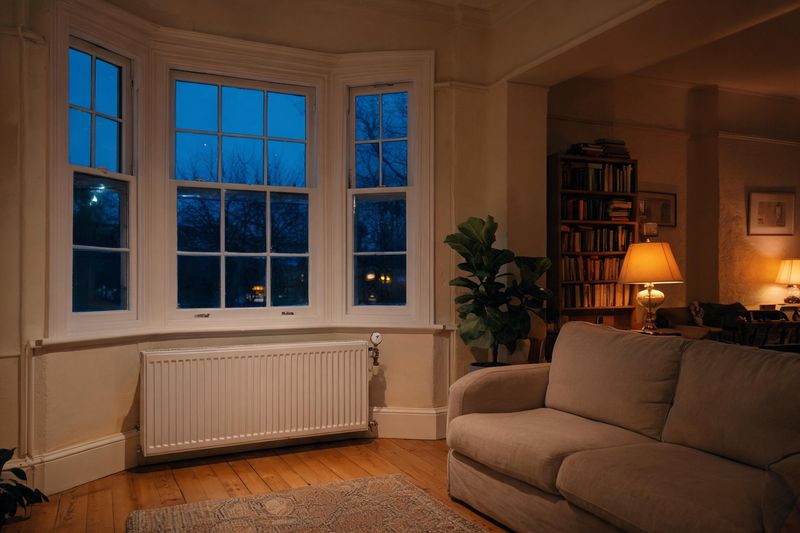
Flow temperature is the single setting that most decides how efficiently a heat pump runs day to day. Almost everything else — the size of your radiators, whether weather compensation is switched on, how the system was commissioned — comes back to it. Here is what it means, why it is lower than the boiler you are used to, and what it should be set to.
What is flow temperature?
Flow temperature is the temperature of the water a heat pump heats and sends out to your radiators or underfloor heating. The water gives up its heat to each room, then returns to the heat pump cooler — the return temperature — to be warmed and sent round again. Our guide to how an air source heat pump works explains that cycle.
The flow temperature a system runs at is not fixed by the heat pump itself; it is a design choice, set to suit your rooms and emitters. A system has two different flow temperatures that matter: the one used for space heating, which drives your everyday running cost, and a higher one used when the heat pump heats hot water — more on that below.
Why a lower flow temperature is more efficient
A heat pump moves heat from the outside air into your water rather than burning fuel. The smaller the gap it has to bridge between the cold outside and the warm water it produces, the less electricity it uses. So the cooler the water it has to make, the more heat you get for each unit of electricity — a ratio called the coefficient of performance, or COP. The government-funded Electrification of Heat demonstration project measured this across real British homes:
| Flow temperature | Median COP (units of heat per unit of electricity) |
|---|---|
| 35°C | 3.50 |
| 55°C | 2.38 |
| Above 65°C | 2.02 |
Source: Electrification of Heat, Heat Pump Performance Data Analysis Report (December 2024), section 1.4.4. These are median COP(H2) values — the efficiency of the heat pump unit itself, measured over half-hourly periods across the trial’s air source and ground source heat pumps — not a whole-system seasonal figure.
By our arithmetic, at those medians each unit of heat needed about 47% more electricity at 55°C than at 35°C (3.50 ÷ 2.38 = 1.47). Treat that as a rough guide rather than a pure flow-temperature effect: the report notes that flow temperature and outdoor temperature are linked, because colder weather raises a home’s heat loss and so pushes the flow temperature up. Its conclusion was blunt — heating systems “should be designed and set up to operate at low flow temperatures for as much of the time as possible”.
The design rulebook points the same way. MCS’s heat pump design standard, MIS 3005-D, says high-temperature heat pumps “should be avoided unless the application requires a flow temperature higher than 55°C”. Where a design does propose a flow temperature above 55°C, the standard says the installer should also offer an alternative design at 55°C or lower, and must explain the difference in efficiency and running cost so you can choose.
Heat pump flow temperature vs a gas boiler
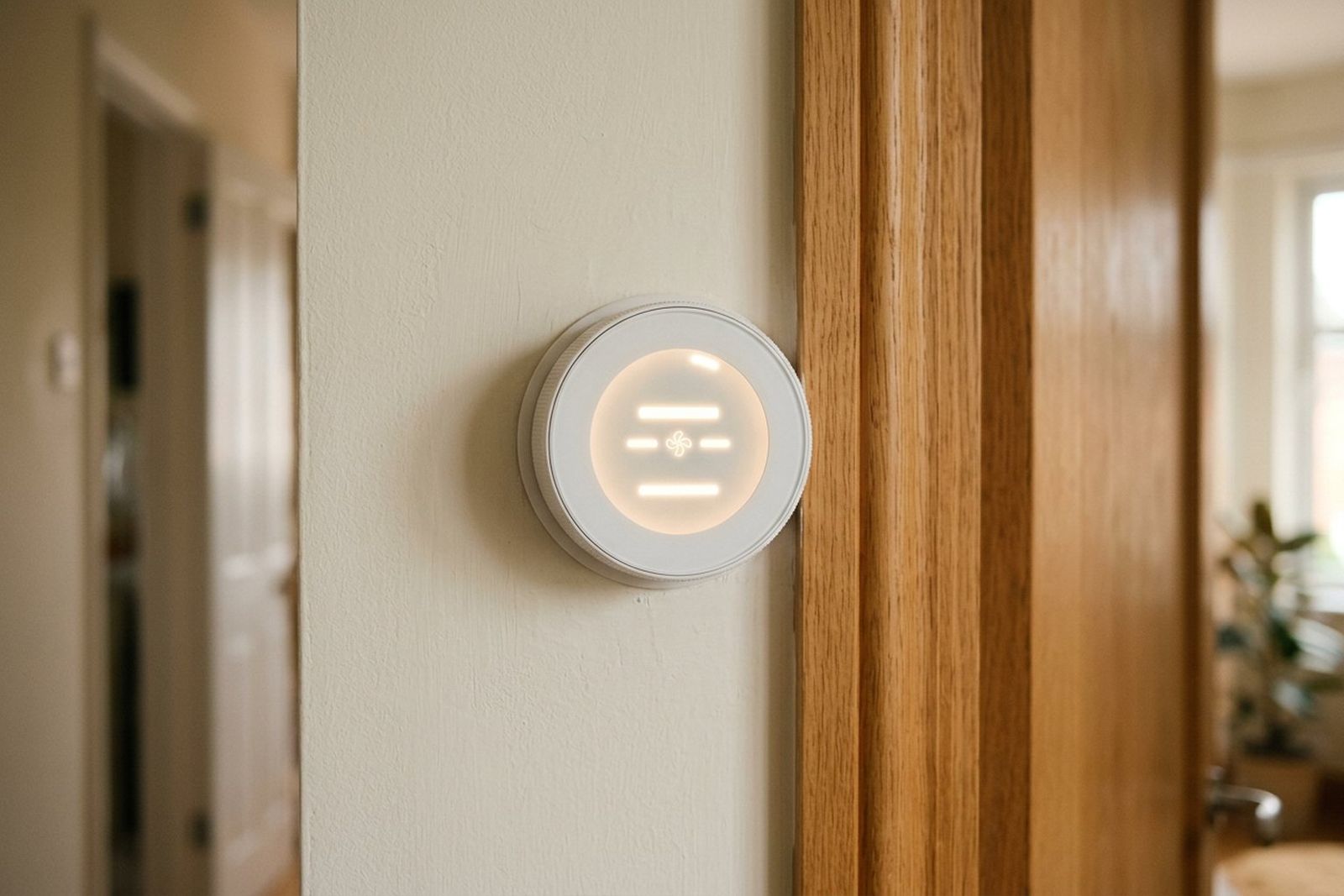
A gas boiler can afford to run hot. According to the innovation foundation Nesta, condensing combi boilers “often have their flow temperatures set between 70°C-80°C by default”. A heat pump is usually designed to run far cooler — commonly in the 35–55°C range.
Why the difference? A boiler makes heat by burning gas, so producing hotter water costs it very little efficiency, and hot water lets small radiators throw out plenty of heat. A heat pump is the opposite: its efficiency falls steadily as the water gets hotter, as the table above shows. So rather than forcing hot water through small radiators, a heat pump is paired with emitters large enough to warm each room with cooler water.
That is why emitter sizing matters so much with a heat pump, and why underfloor heating — effectively one huge emitter — can sit at the very bottom of the range. The MCS heat emitter guide (MCS 021) rates emitters with up to six stars, giving “more stars … when lower heat emitter temperatures are used because the heat pump is able to operate more efficiently”. In its worked examples, a poorly insulated room that needs a flow temperature above 60°C scores no stars and would need a specialist high-temperature heat pump; improving the fabric and fitting a larger radiator brings the same room down to a 45°C flow temperature, and screed underfloor heating can reach 35°C. For how emitters are sized, see whether you need new radiators for a heat pump and heat pumps and underfloor heating.
Weather compensation and the heating curve
Weather compensation is the feature that keeps a heat pump running as cool as conditions allow. The controller automatically lowers the flow temperature when it is milder outside and raises it when it is colder, reading the outside temperature from a sensor on the outdoor unit or an outside wall. So on a mild autumn day the heat pump might run its water well below the design flow temperature, and only approach that full figure on the coldest days of winter — the house stays comfortable, and the system almost never runs hotter than it needs to.
The rule it follows is the heating curve (sometimes called the compensation curve): a line that links outdoor temperature to flow temperature. Set the curve correctly and the flow temperature tracks the weather automatically; set it too high and the heat pump runs hotter, and less efficiently, than the house actually needs.
MCS expects weather compensation to be used. The installation standard, MIS 3005-I, says that “where it can optimise system efficiency with the maximum possible gradient, weather compensation should be enabled”, with an exception only where it would reduce efficiency or be of no practical value. Adjusting the curve is something to do gradually and with your installer’s guidance; our guide to running a heat pump efficiently covers how, along with the other day-to-day settings.
What should my heat pump flow temperature be set to?
Honestly, there is no single number that is right for every home. The flow temperature is set at commissioning to the design flow temperature that came out of your room-by-room heat loss calculation and the emitters you have, then fine-tuned over your first winter. A well-designed system runs as low as it can while still keeping rooms comfortable on the coldest days.
It is a trade-off, which is why a prescriptive “set it to X” does more harm than good:
- Too low and the house will struggle to reach temperature on the coldest days, or lean on the backup heater — a sign the curve or the emitters are not right.
- Higher than it needs to be and you simply throw away efficiency, paying more for every unit of heat for no extra comfort.
The aim is the lowest flow temperature that still keeps you warm when it is coldest. With weather compensation doing the work, you only feel that peak figure on the worst days; the rest of the year the system runs cooler and cheaper. For how much the running flow temperature affects your bills, see how much electricity a heat pump uses.
Why an older system can run too hot
If a heat pump seems to run hotter than it should, it is usually down to one of a few things:
- The emitters are too small. If the radiators cannot give out enough heat at a low temperature, the only way to keep rooms warm is to raise the flow temperature — which drags efficiency down. Upsizing the radiators in the rooms that fall short lets the whole system run cooler (see do I need new radiators?).
- Weather compensation is switched off. Without it, the heat pump runs at a fixed, usually high, flow temperature all season, even on mild days when it could be much cooler.
- It was set up like the old boiler. A like-for-like swap that keeps the old radiators and a boiler-style high flow temperature will work, but it will cost more to run than a system designed around a low flow temperature from the start.
A proper heat loss survey and emitter design are what let a heat pump run cooler, which is the whole point of fitting one. None of these is a fault you should have to live with.
Hot water needs a higher flow temperature
Hot water is the exception to the “run it cool” rule. Where a heat pump heats water for taps and showers, it has to reach a higher temperature than space heating, so for that portion the heat pump is less efficient. MIS 3005-D requires a heat pump serving stored hot water to be “capable of a flow temperature of at least 55°C at design conditions”, and it notes that heat pump hot water takes a larger heat exchanger than a boiler “because the flow temperature is typically lower”.
The key point is that the space-heating flow temperature is the one that drives your everyday efficiency, not the occasional hot-water heat-up. How your hot water is provided depends on your system, and your installer should spell it out; see heat pumps and hot water for the detail.
What to ask your installer, and where ByEco stands
- What flow temperature is my system being designed for, and what efficiency does that give?
- Can correctly sized emitters meet it, or do any radiators need upgrading?
- Is weather compensation enabled, and where is the outdoor sensor?
- Which settings can I adjust myself, and which should I leave to you?
- How will hot water be provided, and at what temperature?
Under MIS 3005-D, before the work starts a good installer gives you, in writing, the specific heat loss of each room, the type and size of every emitter, the design emitter temperature based on the worst-performing room, and “the design flow temperature of the water leaving the heat pump”. That document is where your flow temperature is recorded, and it is worth keeping.
Because it all turns on your property, there is no standard price, and we do not quote one here. The cost depends on the size of system your home needs (its heat loss), whether any radiators or pipework have to change, where the outdoor unit goes and how far the pipe run is, how hot water is provided and any electrical work; our heat pump cost guide explains what drives it. The sensible step is a survey and an itemised quote. You may be eligible for the £7,500 Boiler Upgrade Scheme grant towards an air source heat pump in England and Wales; an installer applies for it and takes it off your quote, and it can only be claimed through an MCS-certified installer. Our Boiler Upgrade Scheme guide covers who qualifies.
ByEco is based in Manchester and installs air source heat pumps for homeowners across England and Wales, mostly around Greater Manchester (see heat pump installation in Manchester). We design each system around a room-by-room heat loss survey so it can run at a sensibly low flow temperature, rather than reusing an old boiler-style setup. ByEco’s MCS and TrustMark certification is in progress. For a free home survey and a clear, itemised quote, with no obligation to go ahead, get in touch; you can also read more about our heat pump installations.
Sources
Every figure on this page was checked against primary sources on 23 October 2026. Grant rules, planning rules and prices change — if you are reading this much later, verify before acting.
- Energy Systems Catapult for DESNZ — Electrification of Heat Demonstration Project: Heat Pump Performance Data Analysis Report (December 2024)
- MCS — MIS 3005-D The Heat Pump Design Standard, Issue 3.0 (5 December 2025)
- MCS — MIS 3005-I:2025 The Heat Pump Installation Standard, Issue 1.0
- MCS — MCS 021 Heat Emitter Guide for domestic heat pumps, Issue 2.1
- Nesta — The impact of boiler optimisation on gas consumption and household comfort (12 October 2023)
- GOV.UK — Apply for the Boiler Upgrade Scheme: what you can get
Book your free home survey
Every home is different. The cost depends on the size of system, any radiators that need upgrading, the pipework and where the outdoor unit goes. Get in touch and we will arrange a free survey of your home and give you a clear quote. If you are happy with it, we can go ahead.